Bialetti®
Moka Express is the result of the genius and creativity of Alfonso Bialetti (1888-1970), an immense Italian entrepreneur. It is named after the city of Mokha (in Yemen), which is one of the first and most important coffee farming areas, especially for the Arabica species. Currently, the Moka Express – to this day, the unchallenged leader in the coffee maker market – is known worldwide as an icon of Made in Italy. It also features in collections at (...) Read More
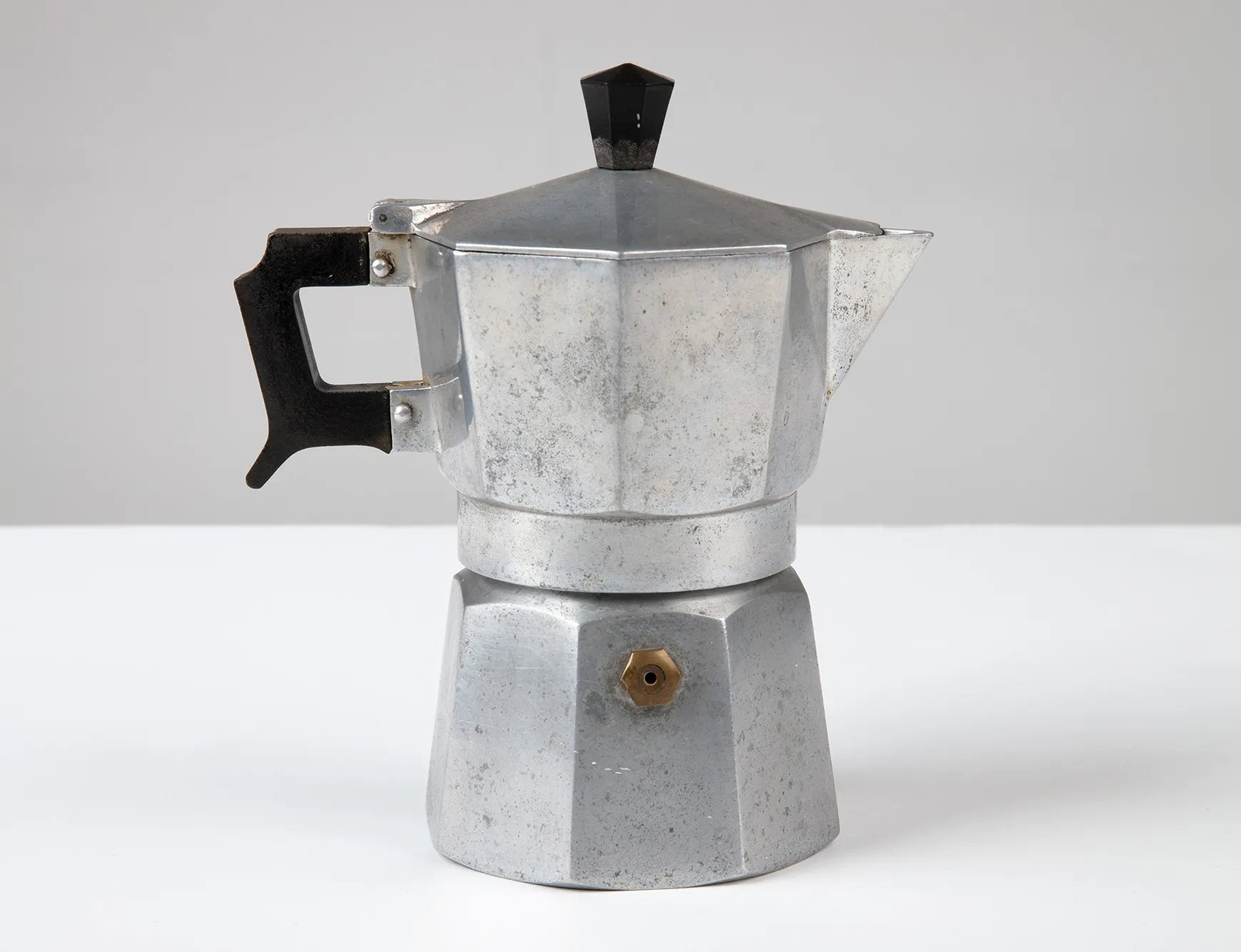
Moka Express is the result of the genius and creativity of Alfonso Bialetti (1888-1970), an immense Italian entrepreneur. It is named after the city of Mokha (in Yemen), which is one of the first and most important coffee farming areas, especially for the Arabica species. Currently, the Moka Express – to this day, the unchallenged leader in the coffee maker market – is known worldwide as an icon of Made in Italy. It also features in collections at the Triennale Milano (the Milan design museum) and the MoMA in New York. Its design has undergone only slight changes over the years, but the shape has always remained octagonal – one of the trademark elements of the product.
Bialetti once stated that he drew inspiration for his invention upon observing his wife do the laundry with a lisciveuse. The latter – a sort of forefather of the washing machine – had a “boiler” part designed to hold water, soap, and dirty clothes, and a pipe with an open top end. Once the water reached the right temperature, it flowed along the pipe, cooled, and flowed back down. This procedure helped melt the soap and spread it evenly on the clothes. This mechanism gave Bialetti the incredible idea for an object that would make a permanent mark in history and revolutionize the domestic coffee-making ritual.
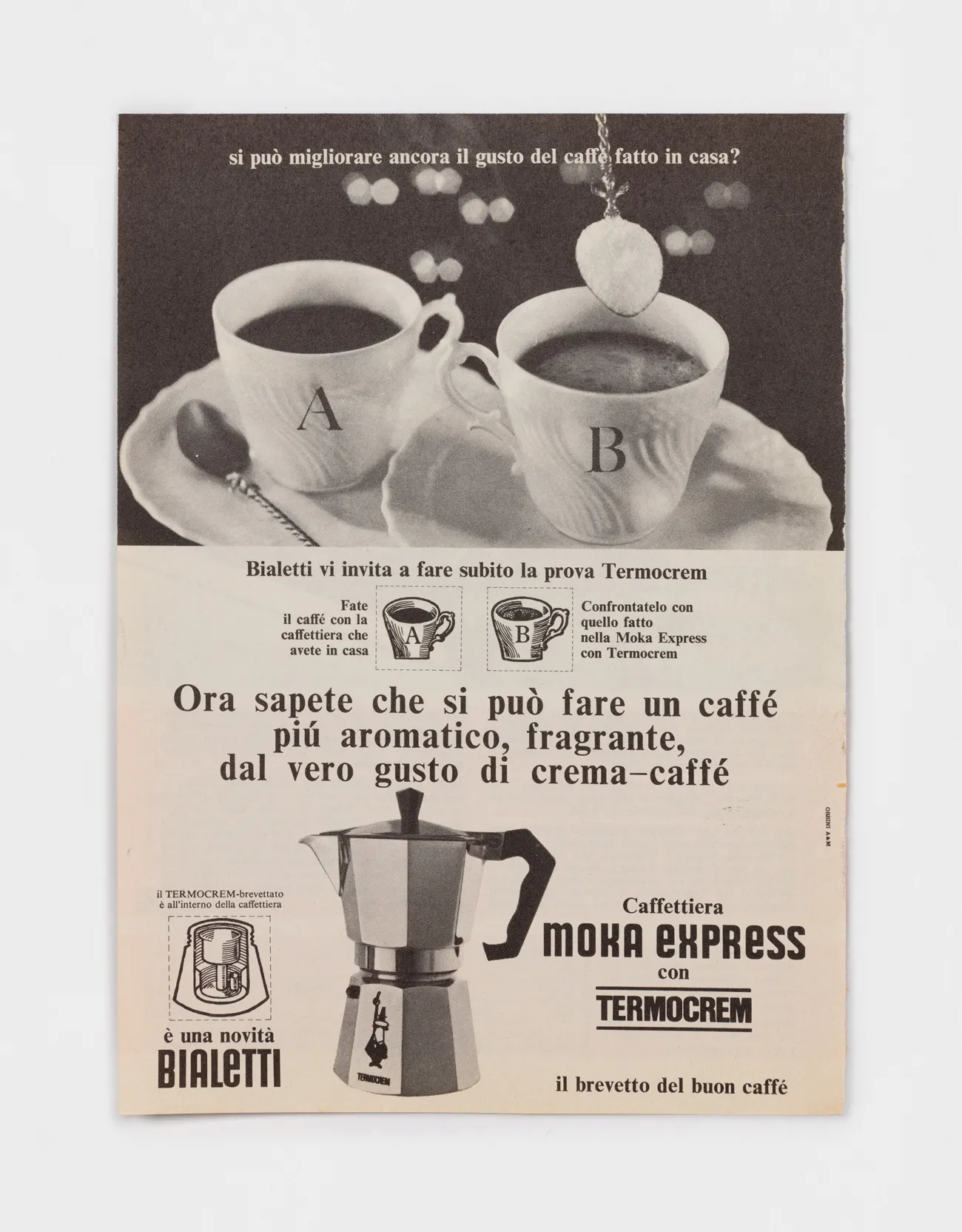
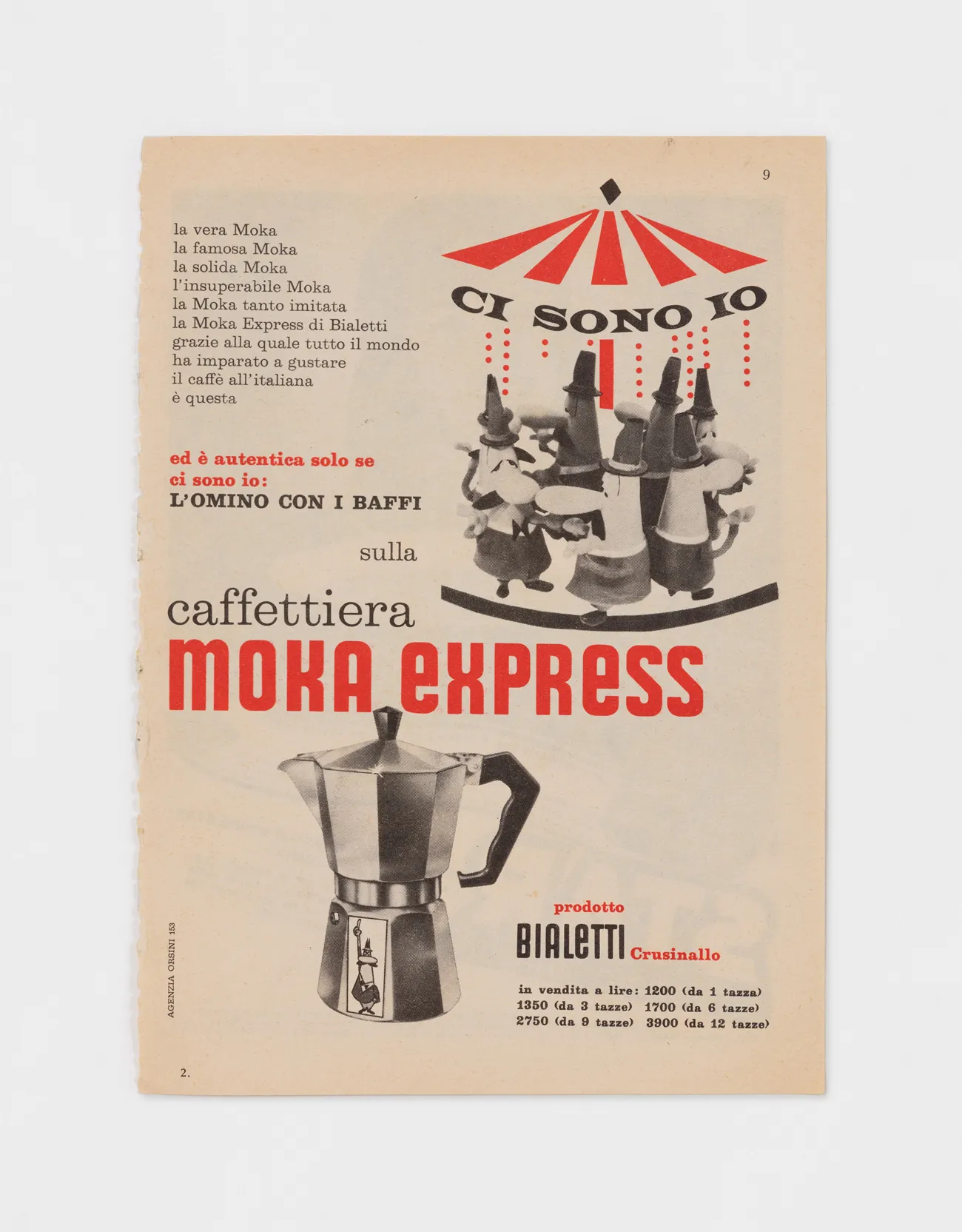
Between the late 1930s and the early 1940s, the entire Bialetti® Moka Express pot production amounted to about 1000 units/year. Alfonso Bialetti himself sold pots at trade shows and, mostly, in the local market. It was his son Renato, who had survived concentration camps in Germany, who redesigned the entire Bialetti® business plan in the 1950s. He commissioned a strong investment in advertising, both nationally and worldwide. It was around this time that the Moka Express entered the foreign market. It was also thanks to this visionary and far-sighted approach that, starting in the second Postwar period, the Moka Express became a mass-marketed product and an icon of the Italian lifestyle. The mustachioed little man was also introduced in the 1950s. He was created by the cartoonist Paul Campani and soon became the symbol of the company and of Carosello (a 60s-70s Italian TV show based on advertisements). He remained in the Bialetti Group logo and on all of its products to this day.
Read Less